The phenomenon of individuals recovering (traumatic) memories under the effects of psychedelics and/or MDMA has been increasingly discussed recently, and for good reason. I’ve talked about this too in some conference presentations and am writing several scientific articles that relate…
Tämä teksti julkaistu aiemmin Psykedeelitutkimusyhdistys ry:n blogissa 19.9.2023
Multidisciplinary Association for Psychedelic Studies (MAPS) -järjestön kolmannen vaiheen MAPP2-tutkimuksen tulokset MDMA-avusteisen terapian hyödyntämisestä traumaperäisen stressihäiriön (PTSD) hoitoon julkaistiin juuri Nature Medicine -lehdessä. Tutkimuksessa oli mukana 104 kohtalaisesta tai vaikeasta PTSD:stä kärsivää potilasta aiempia tutkimuksia laajemmalla etnisten taustojen kirjolla. Osallistujat olivat kärsineet PTSD:stä keskimäärin 16 vuotta, ja monien tilanteissa oli myös hoitoa tyypillisesti hankaloittavia piirteitä kuten useita traumakokemuksia eri yhteyksissä sekä dissosiatiivista oireilua.
Our planet could sustainably hold and provide for eight billion people. However, at this moment, we don’t have the appropriate structures to do this, but instead we are wasting non-renewable resources and polluting our own nest at a truly terrifying rate. Changing these circumstances is, clearly, the greatest and most immediate challenge of our times.
Global population growth appears to be slowing down. With environmental challenges this large, this is probably a good thing in the short term. As our problems related to the environment and climate are better under control, I look forward to more rapid population growth later.
Biological (or cybernetic) immortality, which seems likely to be achieved within the next century, will in any case accelerate population growth once more. This is no reason not to strive for this most important goal for the near future of humanity. But as the human population continues to grow well beyond its current size, we will of course need to expand onto other planets or into outer space otherwise.
These three I consider the most important challenges for humanity as of today: overcoming death, developing a balanced relationship with our planet and a sustainable way of living on it, and expanding beyond our home planet. Insofar as we will not receive help in these endeavors from other possible sentient species out there, we will have to face these challenges by ourselves. For one or a thousand people, they would surely be insurmountable. That’s why I’m glad there’s eight billion of us.
Several companies and research groups continue to investigate the potential effectiveness of psilocybin, a classic serotonin 2A receptor agonist psychedelic, or psilocybin-assisted (psycho)therapy for several psychiatric indications, chief among them depression.
Results of the largest RCT on psilocybin-assisted treatment of treatment-resistant depression to date, with 233 patients, are now out in the New England Journal of Medicine. The main results from this private phase 2b study have previously been presented in press releases, however.
In the final published results by Goodwin et al. (2022), one session of 25 mg of psilocybin, combined with psychological support during the dosing session and a few preparatory and integrative therapeutic sessions reduced depressive symptoms more than smaller doses (10 mg, 1 mg). Compared to previous research and expectations, however, the results may still be considered modest, maybe even disappointing. In the treatment group, 37% of patients had a significant response and 29% were in remission three weeks after treatment, compared with 19/18% and 8/8% of patients in the 10/1 mg groups. At 12 weeks, a sustained response was seen in 20% of patients in the treatment group.
This post provides a slightly extended version of and references for my brief talk at the Interdisciplinary Conference on Psychedelic Research 2022 on September 23, 2022. This research will also be published as a peer-reviewed article later.
“[E]lements of the psychedelic experience, such as experiences of mystical-type, account for the therapeutic benefit” (Palhano-Fontes et al., 2019). “[M]ystical-type experiences are predictive of beneficial outcomes from psychedelics administered in experimental contexts” (Yaden & Griffiths, 2021). Statements such as these are commonly made in recent articles on psychedelics and their potential therapeutic effects, and are typically followed by some references to studies that have indeed found this to be the case. Meanwhile, other authors have questioned the relevance and meaning for therapeutic outcomes of the subjective effects entirely (Olson, 2021) or the concept of mystical experiences in particular (e.g., Sanders & Ziljmans, 2021).
So, what is the evidence that mystical-type experiences under psychedelics associate with or predict changes in well-being and mental health a) in general and b) compared with other possibly relevant acute subjective aspects of the experience (such as psychological insights and emotional breakthroughs)? To my knowledge, no comprehensive reviews on the state of the evidence have been presented1. Therefore, I conducted a comprehensive review based on a systematic search of the available quantitative evidence for such associations.
This blog post presents a rough, general summary of the results of this review to accompany my talk at ICPR 2022. A full, proper article will be published later.
Increasing evidence suggests that consuming psychedelic substances in some contexts may have therapeutic effects for some people. Psilocybin-assisted psychotherapy for depression has entered Phase 2 clinical trials (Carhart-Harris et al., 2021). Meanwhile, experimental, survey-based, and register-based studies suggest links between psychedelic consumption and some areas of well-being (e.g., Agin-Liebes et al., 2021; Jiménez-Garrido et al., 2020; Hendricks et al., 2015; Simonsson et al., 2021; Uthaug et al., 2019). In order to better understand and maximize possible therapeutic effects, it would be very useful to know how, through which psychological mechanisms, psychedelics or psychedelic-assisted therapy may have beneficial outcomes.
Indeed, research on the psychological mechanisms of the effects of psychedelics is increasing. A number of recent publications have suggested various mechanisms and pathways for beneficial effects (e.g., Davis et al., 2020, 2021; Forstmann et al., 2020; Kettner et al., 2021; van Mulukom et al., 2020, Roseman et al., 2018; Thiessen et al., 2018; Zeifman et al., 2020). However, there are some problems and pitfalls in approaches several recent studies have taken to analyzing such mechanisms. Many of these problems and unstated assumptions in mechanism research have previously been pointed out and discussed in other areas of research, especially psychotherapy and social psychological research. Here, I discuss the value, challenges, and best practices of providing convincing evidence for the psychological mechanisms of the possible therapeutic effects of psychedelics.
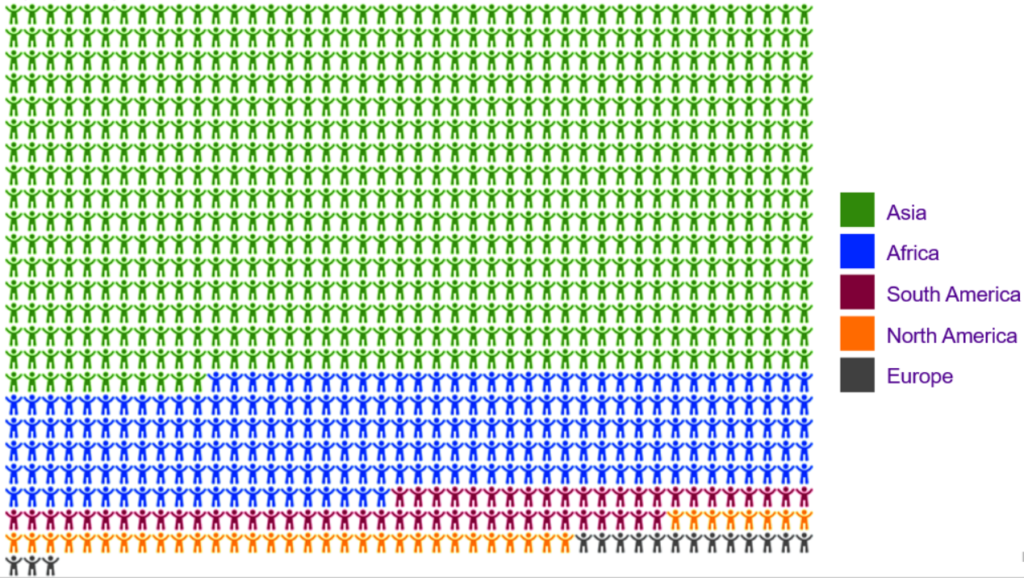
According to estimates based on surveys from around 100 countries, a minimum of one billion children and adolescents under the age of 18 are exposed to some form of violence during each year (Hillis et al., 2018). Here they are. Except every one of these symbols represents one million children and adolescents, not one.
Children and adolescents under the age of 18 exposed to violence annually. Approximate illustration based on Hillis et al. (2018).
Tämä yleisluontoinen katsaus on kirjoitettu pyynnöstä Cortext-lehteen ja julkaistu sen numerossa 2/2017
Psykedeelinen renessanssi orastaa tieteessä
Samuli Kangaslampi
”Taikasienistä ihmelääke masennuksen hoitoon?”1, ”LSD palauttaa aivot samanlaiseen tilaan kuin vauvana”2, ”Hannu söi huumesieniä parantumattoman syövän aiheuttamaan shokkiin”3 – Psykedeelit ovat viime aikoina näkyneet suomalaisessakin mediassa. Aiheeseen liittyvän asenne- ja mediailmapiirin muutoksen ohella taustalla vaikuttaa myös psykedeelien nouseminen uudelleen vakavasti otettavan tieteellisen tutkimuksen kohteiksi, sekä perustutkimuksessa että mahdollisten kliinisten sovellusten osalta. Miten tiede näkee psykedeelit, ja mistä syistä niitä tutkitaan?
Exporting data from SPSS (23) to Mplus (7.3) – a simple step-by-step guide
Exporting data from SPSS to Mplus is theoretically a simple process, but can still be a little more complicated than it should be. Various instructions exist all over the Web, but many of them forgo a couple of details that may not be obvious to novices. Here’s my reasonably fool-proof step-by-step guide.
An interesting side effect of having published an article in a widely indexed open access journal has been the influx of invitations to publish articles/reviews/comments/anything at all or to review research articles in a variety of journals with names ranging from Medical Sciences to the Austin Journal of Psychiatry and Behavioural Sciences. In a similar vein, I have been invited to appear as a distinguised speaker at, e.g., the annual 4th International Conference and Exhibition on Immunology and the International Conference on Brain Disorders and Therapeutics.
Publishing a single study protocol has clearly made me a veritable superstar of science, as my contribution is urgently needed at all sorts of events and publications barely even related to my field of study. How flattering! What’s more, these invitations have addressed me variously as “Doctor Kangaslampi”, “Dr. Samuli Kangaslampi” and even “Dr S.”, though my PhD is still a few years off. An understandable confusion looking at my long list of publications and academic work over many years!
These invitations are, of course, part of an unfortunate trend of elaborate scams circulating in the academia.
Mediating/intervening variable effects can be examined and demonstrated in a variety of ways in psychological research. One approach is the so-called difference in coefficients method, where the significance of the difference between the direct path from X to Y with…